EVA
Appearance: clean molded profile. Role: lightweight structure and impact management. Applications: hard cases and organizers. Customization: density, shape, textile wrap and color direction.
Structure and surface
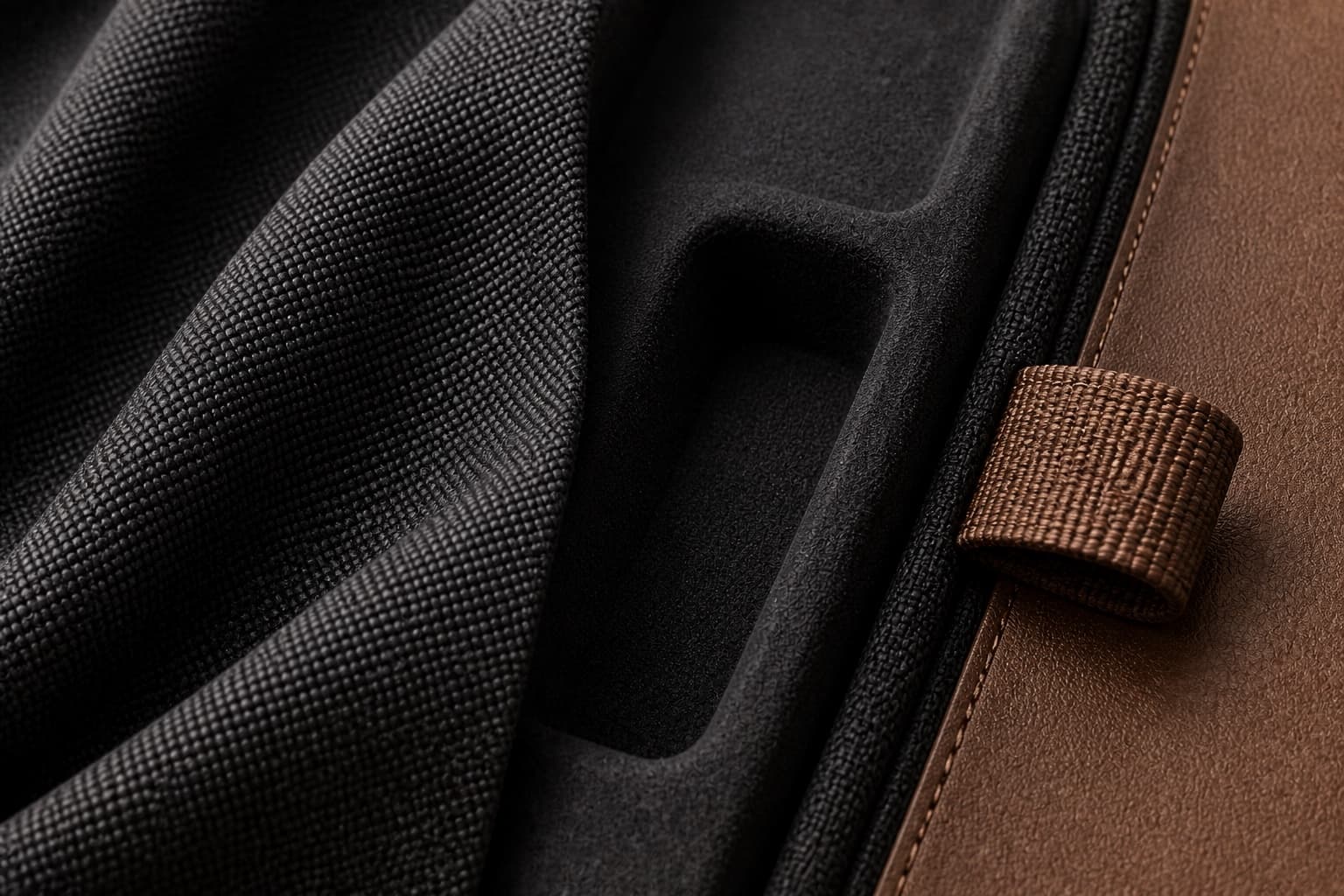
Material selection connects protection, touch, appearance, durability, customization and the intended carrying experience.
Direct answer
The best material for a smart eyewear case depends on its role: structural materials shape protection, surface materials shape touch and appearance, and interior materials manage contact with the device.
Material library
Appearance: clean molded profile. Role: lightweight structure and impact management. Applications: hard cases and organizers. Customization: density, shape, textile wrap and color direction.
Appearance: woven textile surface. Role: exterior wrap, pockets or lining. Applications: organizers and cases. Customization: weave, color, lamination, print and labels, subject to the selected supply.
Appearance: refined, smooth or grained surface. Role: premium exterior or accent. Applications: executive carry and retail presentation. Customization: color, grain, embossing and edge details.
Appearance: technical woven finish. Role: durable exterior, pocket or strap. Applications: travel and sports carry. Customization: denier, weave, color and trims, subject to availability.
Appearance: soft, precise and premium. Role: lining or high-touch interior surface. Applications: premium smart eyewear programs. Customization: color and panel execution within selected specifications.
Appearance: smooth technical component or coating. Role: flexible protection, grip or cleanable detail. Applications: inserts, molded elements and performance accents. Customization: geometry, texture and color direction.
Selection method
We do not assume certifications from a material family name. Recycled content, testing and documentation must be verified against the exact selected supply and project requirement.
Review grain, weave, reflectivity, color consistency and how the material meets adjacent parts.
Define whether the material provides structure, abrasion resistance, cushioning, lining or surface character.
Consider travel pattern, contact points, cleaning, moisture and expected handling.
Validate branding methods, minimums, color matching and sample behavior on the actual material.
Evidence required
State whether the requirement concerns recycled content, a named certification, traceability or another documented attribute.
Identify whether evidence applies to the exterior textile, lining, strap, structural layer or the complete finished product.
Check supplier documents against the actual material code and project specification before any public or retail claim is approved.
Do not extend a raw-material claim to the complete case unless the full product basis supports that statement.
Frequently asked questions
No. EVA commonly provides structure and can be wrapped with a textile or other surface material to achieve the required look and feel.
Yes. A case may combine a structural shell, exterior wrap, soft lining, molded tray, pocket mesh and branded hardware.
No. Any recycled-content or certification requirement must be checked against the exact supplier documentation for the chosen material.
Start a project
Share the product, accessories, stage and quantity. We will define the next useful step.
START YOUR PROJECT