Travel organizers
Multi-compartment systems for eyewear, brand-supplied charging items, neckbands, cables and daily accessories.
Concept to production
A device-specific, retail-aware development route for smart eyewear brands, wearable technology teams and consumer electronics companies.
Direct answer
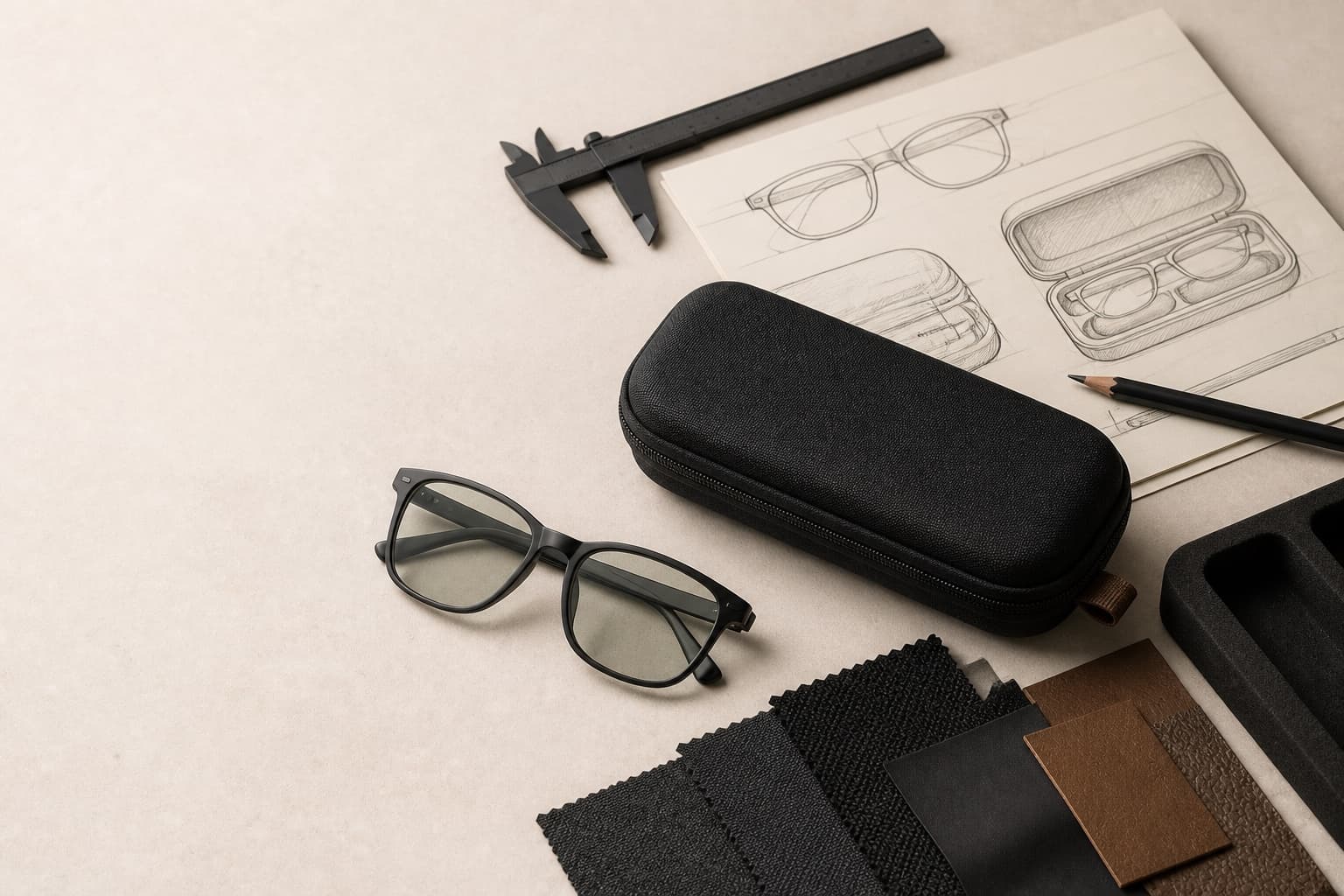
Smart eyewear accessories OEM and ODM covers cases and organizers from product and accessory mapping through mechanical structure, materials, prototypes, sample refinement, production specifications and retail packout.
What we develop
Multi-compartment systems for eyewear, brand-supplied charging items, neckbands, cables and daily accessories.
Structured shell and interior solutions for AI glasses and smart eyewear.
Compact protection for performance frames, lenses and active-travel accessories.
Coordinated case, accessory and packaging directions for retail or launch programs.
Who we work with
Translate an early product brief into a practical structure and prototype route.
Extend an existing product language into a new case, organizer or accessory program.
Coordinate device protection, accessory organization and retail packout.
Balance lens geometry, travel protection, access and performance materials.
Customization
Shell profile, internal trays, pockets, dividers, retention and closures.
EVA, RPET, vegan leather, recycled nylon, Alcantara and TPU directions.
Color, print, embossing, labels, hardware and interior presentation.
Manuals, inserts, label zones, retail boxes and carton planning.
Program inputs and deliverables
Device CAD or samples, the full accessory set, sensitive contact areas, use case, target quantity, market, packaging and brand direction.
Clearance, support, retention, pockets, trays and cable control can accommodate brand-supplied charging accessories. Electronics are outside our stated scope.
Material, color, marking, dimensions, sample refinements and packaging requirements are aligned in the approved project specification.
Loading order, manuals, inserts, label zones, barcode placement, external packaging and carton assumptions are reviewed before production approval.
Process
Align product, user, use case, commercial requirements and target experience.
Define the protection plan, compartment architecture and surface direction.
Evaluate fit, handling and appearance, then document the required refinements.
Approve specifications and coordinate quality and packout checkpoints.
Frequently asked questions
OEM usually develops from a defined product or construction direction, while ODM includes broader structure and design development. The right route depends on how complete your brief is.
CAD and dimensions can begin the process, but a physical product sample is strongly useful before final fit approval when geometry or contact points are complex.
That depends on product readiness and complexity. The first sample identifies fit and construction issues; refinements continue until the agreed specification is ready for production review.
Yes. Sharing retail and logistics requirements early helps prevent late changes to case dimensions, inserts and carton fit.
Start a project
Share the product, accessories, stage and quantity. We will define the next useful step.
START YOUR PROJECT