Frame geometry
Temple thickness, hinge position, lens depth and folded profile guide the interior architecture.
Protective hard case
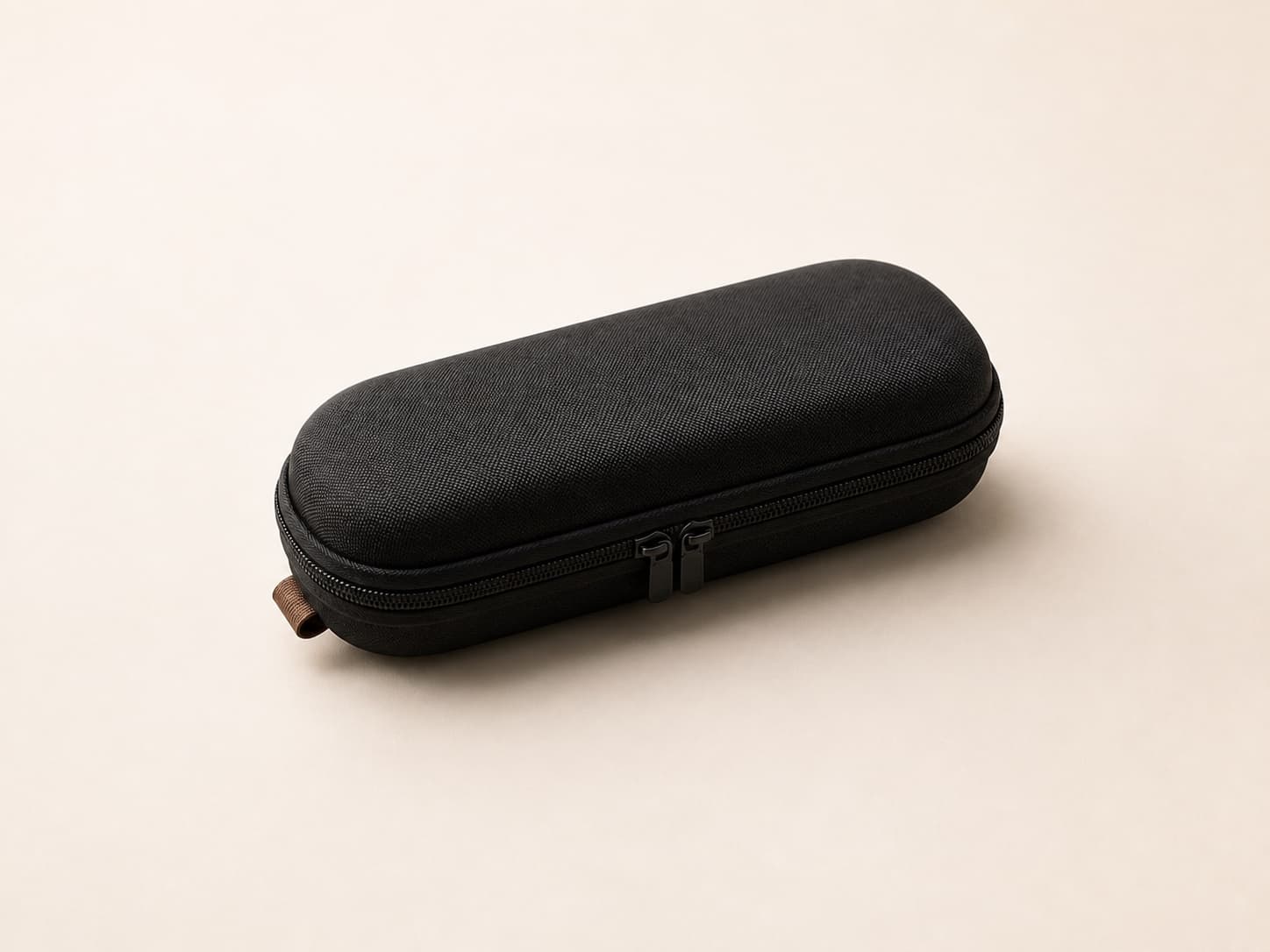
Custom protective hard cases developed around AI glasses geometry, sensitive components, accessory storage and brand language.
Direct answer
An AI glasses case is a protective carrying structure engineered around the frame, lenses, temples and sensitive components, with optional mechanical storage for brand-supplied charging cases, capsules or cables.
Protection
As an AI glasses case manufacturer and OEM development partner, we align shell, interior and closure decisions with the product profile.
Temple thickness, hinge position, lens depth and folded profile guide the interior architecture.
EVA or other structured formats can be tuned for the intended travel and retail context.
Textiles, recycled nylon, RPET and vegan leather can shape grip, durability and premium feel.
Soft linings, molded trays and retention points protect high-contact areas and control movement.
Custom development
Develop from an existing construction direction with customized dimensions, materials and branding.
Explore a new structure around the desired use case, accessory set and brand experience.
Evaluate embossing, print, woven labels, zipper pulls and applied details against the selected surface.
Coordinate the case with manuals, retail packaging, barcode zones and carton constraints.
Charging-ready mechanics
A recess or retained pocket can be developed around the exact brand-supplied charging case or capsule.
Loops, channels or a separate pocket can reduce loose movement and keep hard connectors away from lenses.
Eyewear Carry develops the mechanical case structure and organization. It does not design, manufacture or certify charging electronics.
The final sample should be checked with the intended device, charging items, manuals and retail packaging in place.
Development inputs required
Provide CAD, folded dimensions or a physical sample and identify cameras, speakers, hinges and pressure-sensitive areas.
Define where the product may be supported and where the lining, tray, zipper or accessories must not touch.
Describe daily carry, travel, launch-kit or retail-bundle use so structure and bulk can be balanced.
Share quantity, destination market, branding, packaging and timing context for feasibility review.
Process
Share product dimensions, CAD or physical samples and the complete accessory list.
Set shell, interior, materials, closure and branding routes.
Check fit, contact points, opening experience and visual finish.
Confirm the production specification, packaging and quality checkpoints.
Frequently asked questions
We need the folded product dimensions or CAD, sensitive contact areas, accessory list, target use, quantity, branding and packaging requirements.
Yes. A pocket, molded position or separate compartment can be considered where the available volume and protection plan allow it.
Yes. Share manuals, inserts, label zones, barcode requirements, the loading sequence and external packaging constraints before the final case dimensions are approved.
Start a project
Share the product, accessories, stage and quantity. We will define the next useful step.
START YOUR PROJECT